How Suspension Data Acquisition Tools Eliminates Approximation within Chassis Optimization
Within the demanding world of today's professional oversteer competition, success is not merely purely a function of sheer horsepower or pilot aggression. Instead, it has evolved into a multifaceted science that necessitates a meticulous blend of picking a proven vehicle platform, outfitting it with the correct performance parts, and, most essentially, understanding its real-time characteristics on the course through advanced suspension tuning applications. This definitive guide will serve as your blueprint starting from the very first idea of a drift build all the way to the final telemetry-optimized refinements that turn a capable vehicle into a repeatable champion. We will delve deep into the precise engineering of chassis dynamics adjustment, showing how a advanced suspension tuning tool like GripDial eliminates assumptions and delivers unmatched visibility into your car's actual behavior.
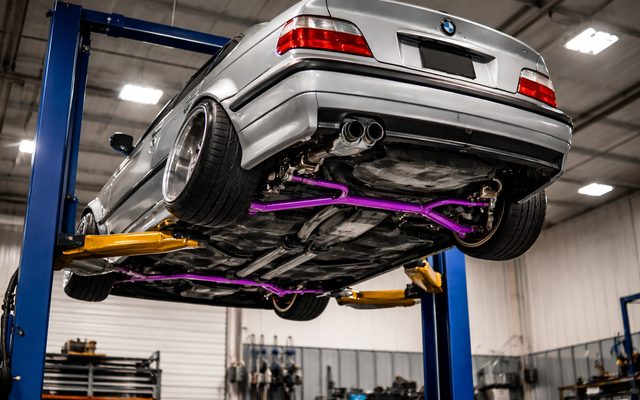
The cornerstone of any exceptional drift machine is, undoubtedly, the platform itself. A select group of cars have earned iconic standing within the international oversteer scene due to their natural weight distribution, strong build quality, and the vast ecosystem of aftermarket support available. Picking the optimal starting point is the initial and most significant choice a builder will make. For instance, the BMW E36 is commonly accepted as perhaps the the greatest overall drift platforms of all time. Its near-perfect evenly distributed mass, coupled with a driven rear axle setup and extremely reliable inline-six engines, forms a platform that is at once accessible for newcomers and highly effective in the hands of a pro driver. The successor of this philosophy, the BMW E46, refines these strengths with a increasingly developed chassis, broader track for improved confidence, and even a greater degree of lock as standard from the factory. A different dominant contender in the professional circuit is the Chevrolet Corvette C6.
This American performance car offers a unique array of strengths to the drifting world, such as a low-mass aluminum chassis, a transaxle-style drivetrain component that contributes to an ideal balance, and the colossal low-end power of a big GM LS engine. This combination makes it an utter monster on track, designed of entering and maintaining long slides with apparently easy deployment of acceleration. For those seeking exceptional bang-for-the-buck, the 350Z model Nissan excels as a excellent candidate. It is delivered from the manufacturer with a stiff chassis, a competent factory limited-slip differential, and the responsive V6 motor that delivers plenty of performance for practicing and moving up in the discipline. Its follow-up, the Nissan Z34, brings more advancements in body strength, steering geometry, and peak powerplant performance, establishing its status as a popular selection among competitive drivers. Other legendary platforms that deserve attention are the agile unique Mazda FC, the most popular Nissan S13 240SX, the V8-powered Ford SN95, the electronic-equipped BMW E90, and the small yet incredibly engaging and instructive MX-5 Miata. All of these chassis gives a different set of characteristics, difficulties, and capabilities, but they all have in common the core elements required to serve as a serious drift car.
However, selecting the right chassis is merely the beginning. To unlock the true potential of any of these vehicles, significant modifications to the steering and suspension systems are utterly non-negotiable. This is where the domain of precision aftermarket components comes into vital importance. The one most impactful modification for a dedicated drift car is the integration of a drift-spec steering angle kit. These advanced assemblies, for example those manufactured by industry leaders like SLR Speed, are engineered to radically increase the chassis's possible lock-to-lock rotation. A factory road car is extremely constrained in how far its tires can rotate, a safety limitation for daily operation. In oversteer driving, but, aggressive steering input is continuously necessary to catch and sustain a angle. An steering kit exchanges the OEM uprights, tie rods, and potentially suspension arms with parts that allow the steered wheels to attain degrees of turn beyond 70 or even 80 degrees, as opposed to a average stock limit of around 40 to 50 degrees.
This vastly greater lock provides the operator with dramatically more control during a angle, allowing it to be much easier to begin a drift, maintain it through a long turn, and transition fluidly from one angle to another. The contrast in drivability is truly revolutionary. Coupled with a properly selected modification is the every bit as critical enhancement to the vehicle's damping system. Generic or including premium street coilovers are just not designed for the specific and extreme requirements of competitive oversteer. A dedicated pair of adjustable dampers is of utmost importance. These specialized dampers have unique damping rates and spring strength that are tuned for the violent mass transition that is characteristic of aggressive driving. When a pilot begins a slide, the chassis's mass is transferred forcefully to the outside of the bend. Proper performance suspension manage this movement in a predictable fashion, enabling the vehicle to stabilize quickly and offering the operator accurate feel through the steering wheel and seat. They also enable precise adjustment of ground clearance, shock absorber rate, and weight balance, which are all integral parts of fine-tuning the vehicle's behavior to a particular circuit or piloting approach. As a system, a top-tier drift angle kit and a properly specified set of drift-spec coilovers form the absolute mechanical foundation upon which all subsequent tuning is built.
Once the essential parts is fitted, the following vital step in the development is the precise tuning of the vehicle's alignment. This is the world of car suspension tuning, a process that can seem overwhelmingly complex to the beginner but is, in practice, the defining factor to converting a assembly of fast parts into a harmonious and controllable machine. The most debated element of alignment for drifting is definitely negative camber. Camber angle is the angle of the wheel compared to the perfectly straight plane when viewed from the front of the chassis. If the top of the tire is angled towards the car, this is called negative camber. In sliding, negative camber on the front tires is generally employed and is seen as necessary. The reason is deeply tied to physics.
When a chassis is turning at extreme sideways angles, the chassis rolls to the outside of the bend. This chassis roll causes the outer steering tire to diminish its ideal contact patch with the asphalt. By adding inward lean, the tire is pre-tilted to account for this roll. As the chassis leans into the bend, the tire flattens out on the road surface, optimizing its bite at the exact moment when it is absolutely essential for directional command. Usually, front adjustments for a serious drift machine range from approximately -3 degrees to as high as -5 degrees or even greater, depending on the parameters of the car setup, compound selection, and driver feel. The rear axle wheels also employ inward tilt, but the settings are typically more conservative and less aggressive than the front axle. Excessive inward lean at the back can make the car extremely tail-happy and difficult to control on throttle application, as it diminishes the usable contact patch of the driven tires during linear power delivery. Thus, rear camber settings are often in the range of -1 degree to -3 degrees, finding a delicate equilibrium between offering enough lateral traction to aid in entering and sustaining the slide while also preserving effective grip for acceleration the turn. camber angle is merely one component of the more complex tuning puzzle, which also involves toe, caster, and suspension-induced steering correction.
Toe setting refers to the orientation of the tires as seen from above. Positive toe means the front edges of the tires are nearer together than the trailing edges, while toe-out means the reverse. For oversteer, a slight amount of front axle negative toe is frequently run to quicken the initial response handling feel, making the vehicle feel more agile and eager to start a slide. Rear toe is typically set to zero or a extremely slight amount of toe-in to encourage straight-line stability under power. Caster is the frontwards or aft angle of the steering axis when looked at from the lateral of the chassis. More caster improves feedback and high-speed solidity, and it furthermore increases negative camber effect during cornering, which is highly advantageous. Adjusting these parameters is a detailed interaction where a adjustment to a single parameter can and will affect the others. The old-school method for setting a chassis's alignment for drifting has long been a tedious endeavor of experimentation and feeling. A tuner or engineering group would apply a adjustment based on experience, run the vehicle on track, use the driver's individual perception and comments, and then make an additional change. This cycle would repeat time after time until the vehicle felt "good" or the scheduled testing time ended. This approach is not only exceptionally slow in terms of time and costs, but it is additionally fundamentally inaccurate.
Human feel is a famously unreliable measurement tool, colored by numerous factors such as exhaustion, varying track grip levels, ambient heat, and simply the mindset of the driver on that specific day. What feels "loose" on one pass might feel "tight" on the subsequent lap, leading to conflicting feedback and ineffective changes. This age-old challenge in car suspension tuning is exactly where state-of-the-art engineering tools has made its mark to revolutionize the methodology.
The advent and application of specialized vehicle dynamics tools has brought about a new era for engineering and refining competitive sliding vehicles. These platforms, exemplified by groundbreaking solutions like GripDial, work by actively measuring the live physical behavior of the car as it is piloted on the circuit. Unlike using subjective feel, these systems acquire quantifiable metrics on essential variables such as suspension travel, individual tire rotation, acceleration forces, wheel angle, and driver input application. This raw data stream is then analyzed by advanced applications that can plot and interpret the data in a clear way. For the first time ever, drivers and teams can visualize specifically what the car is exhibiting at any given point of a lap. This capability changes the complete suspension tuning process. Imagine the specific task of setting the front camber for a particular car. Instead of making a change from -3 degrees to -3.5 degrees and then driving multiple laps to try and "feel" a improvement, a suspension tuning tool can provide real-time and definitive information. The tool can display visually how the wheel's grip is behaving during the critical moments of a angle: initiation, mid-corner, and changing direction. It can reveal if the present angle is enabling the outside front tire to maintain ideal loading or if the rubber is over-stressed on its outer shoulder.
The software can subsequently provide data-driven advice for modification. Perhaps the telemetry shows that the tire is even stressing its outer shoulder at -3.5 degrees of camber, implying that an increase to negative camber, say -4 degrees, might be beneficial. Alternatively, the information might show that the tread is failing to coming up to temperature or that the inside shoulder is degrading too quickly, which could indicate that there is too much angle and a modest reduction back to -3.2 degrees would be more ideal. This level of granularity and useful insight was completely unattainable in the time of solely mechanical adjustment.
The effect of employing a advanced vehicle dynamics tool reaches well beyond only dialing in camber. It serves as an invaluable damper adjustment manual that is tailored to your particular car. When setting the rebound and compression clickers on your adjustable dampers, rather than relying on general advice or replicating another driver's settings, you can use the data to analyze how the car is performing in response to your changes. The software can graph the suspension travel path over a lap, showing if the coilovers are controlling the body movement effectively or if they are permitting the vehicle to bounce too much after a flick. It can help in identifying challenges like bottoming out or losing droop, permitting you to make educated adjustments to spring preload, damping settings, or ride height. This methodology extends equally to the detailed task of suspension geometry optimization. Beyond camber, the software can provide data into how modifications to toe and caster angle are influencing drift suspension tuning guide the car's handling during different phases of a lap. For example, it can assist you to determine the ideal amount of front axle negative toe for your specific steering rack geometry and driving technique by showing the speed of initial reaction and the predictability of the chassis at maximum countersteer. This transforms the system an extremely useful drift suspension tuning guide that is actively updated by the real-world dynamics of your own vehicle on the tarmac. It moves the complete endeavor from a mysterious craft into a scientific engineering process.
Additionally, the utility of a platform like data acquisition is not restricted to professional engineers with vast resources. For the club-level driver, it serves as an powerful force multiplier. It practically offers the tuner with the insight of a full-time suspension specialist without the associated expense. It drastically shortens the tuning process by providing clear solutions to problems that would normally take countless track days of experience to understand. A builder can understand how their individual vehicle reacts to specific inputs, developing a deeper understanding of car control in the journey. It also makes accessible professional performance tuning concepts, enabling all drivers with the ambition to refine their car to achieve it in a systematic and successful fashion. This is particularly important in a discipline like sliding, where setup knowledge has traditionally been a tightly held advantage among professional crews. Now, that knowledge can be in the hands of any dedicated driver.
In summary, the path to engineering and optimizing the perfect championship-contending sliding vehicle is a multi-stage project that perfectly combines proven mechanical principles with revolutionary data solutions. It commences with the strategic selection of a proven platform, then enhanced by the application of non-negotiable competition components like maximum-angle steering angle kits and correctly specified competition suspension units. The build then moves into the precision stage of alignment optimization, where settings like camber angle, toe setting, and caster angle are carefully set to suit the car's modified geometry and the pilot's specific style. Finally, and what truly separates the modern approach from the traditional methods, is the use of a sophisticated vehicle dynamics tool. This system eradicates the approximation and trial and error of only seat-of-the-pants tuning by providing vehicle dynamics tool objective, real-time data on how the vehicle is actually performing. It acts as an incredible suspension tuning tool, a comprehensive drift suspension tuning guide, and a master vehicle dynamics tool. Together, this holistic methodology leads to that all component of the competition vehicle—from the choice of the car to the last adjustment on drift tuning app the coilover—is optimized for maximum success on the competition venue. It signifies the complete evolution of the sport of oversteer driving, connecting physical driving skill with precise vehicle setup to forge the ultimate effective vehicles imaginable.